
Paper Accepted in ApJS: Precision Detector Calibration for the Simons Observatory by Assoc. Prof. Shunsuke Adachi

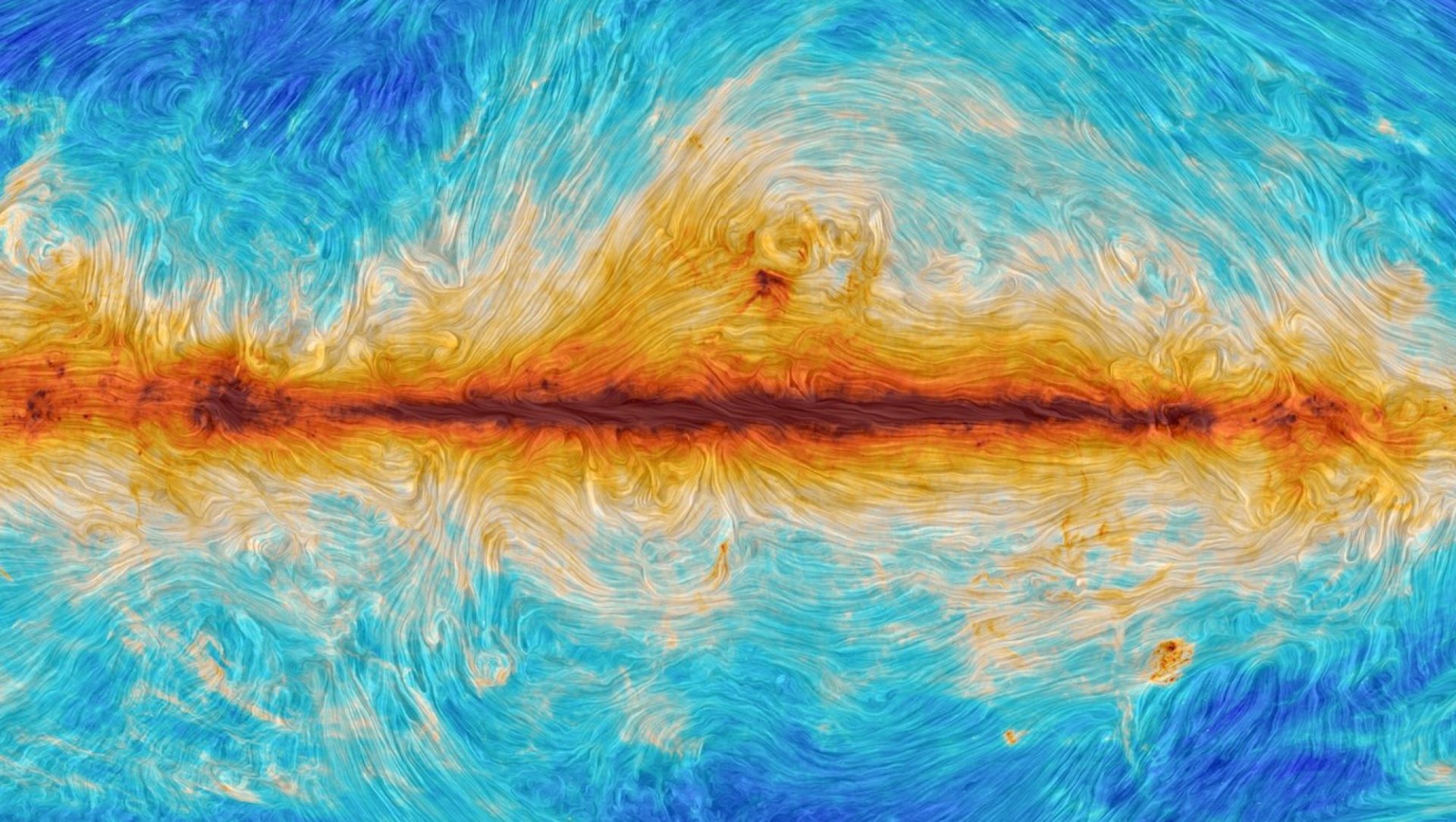
Research led by Associate Professor Shunsuke Adachi and his team as part of the Simons Observatory (SO) international collaboration has been accepted in the prestigious astronomical journal, The Astrophysical Journal Supplement Series (ApJS).

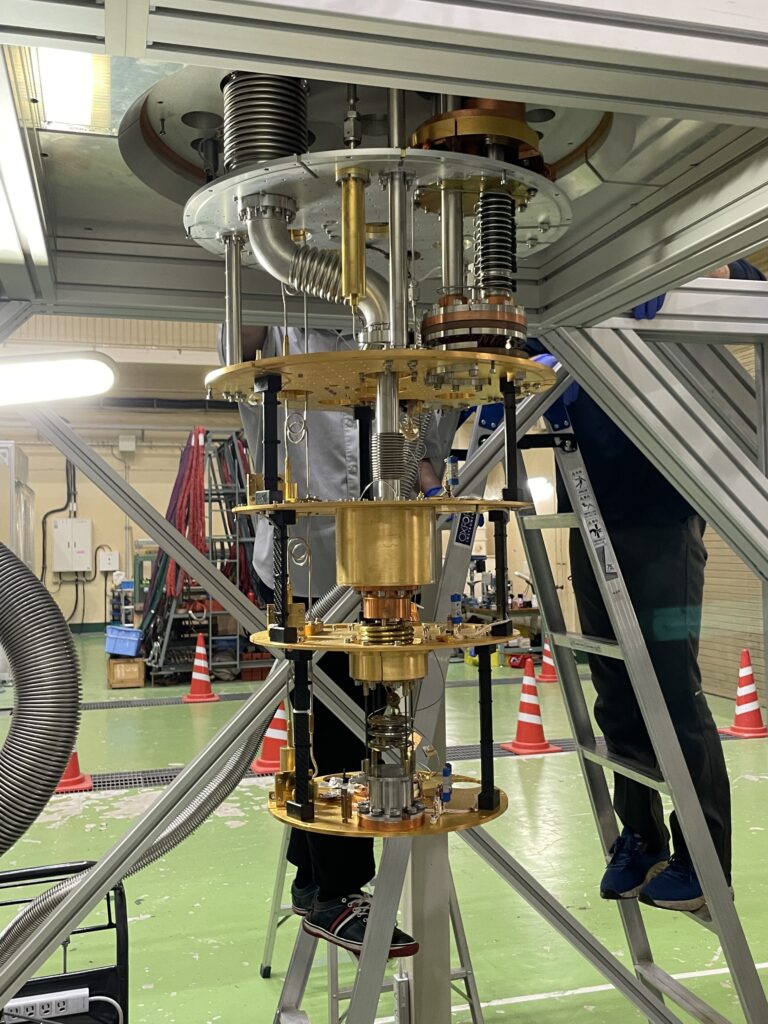
This paper presents the initial results of the detector antenna angle calibration for the Small Aperture Telescope (SAT) located in the Atacama Desert, Chile. The study utilized a “Sparse Wire Grid” calibrator, a device that is being developed in our laboratory.

To capture the faint polarization signals of the Cosmic Microwave Background (CMB), it is essential to determine the detector angles with extreme precision. This successful demonstration of our calibration technology significantly enhances the accuracy of future observational data. This achievement marks a major step forward in the search for primordial gravitational waves, which hold the key to uncovering the mysteries of the universe’s birth.

Publication Information

  • Title: The Simons Observatory: Detector Polarization Angle Calibration using Sparse Wire Grid with Initial Data Sets of the Small Aperture Telescope
  • Authors: H. Nakata, S. Adachi, K. Yamada, M. Randall, et al.
  • Journal: The Astrophysical Journal Supplement Series
  • Links: https://arxiv.org/abs/2512.19102

Associate Professor Adachi attended the 11th Workshop on Low-Radioactivity Techniques and delivered an oral presentation

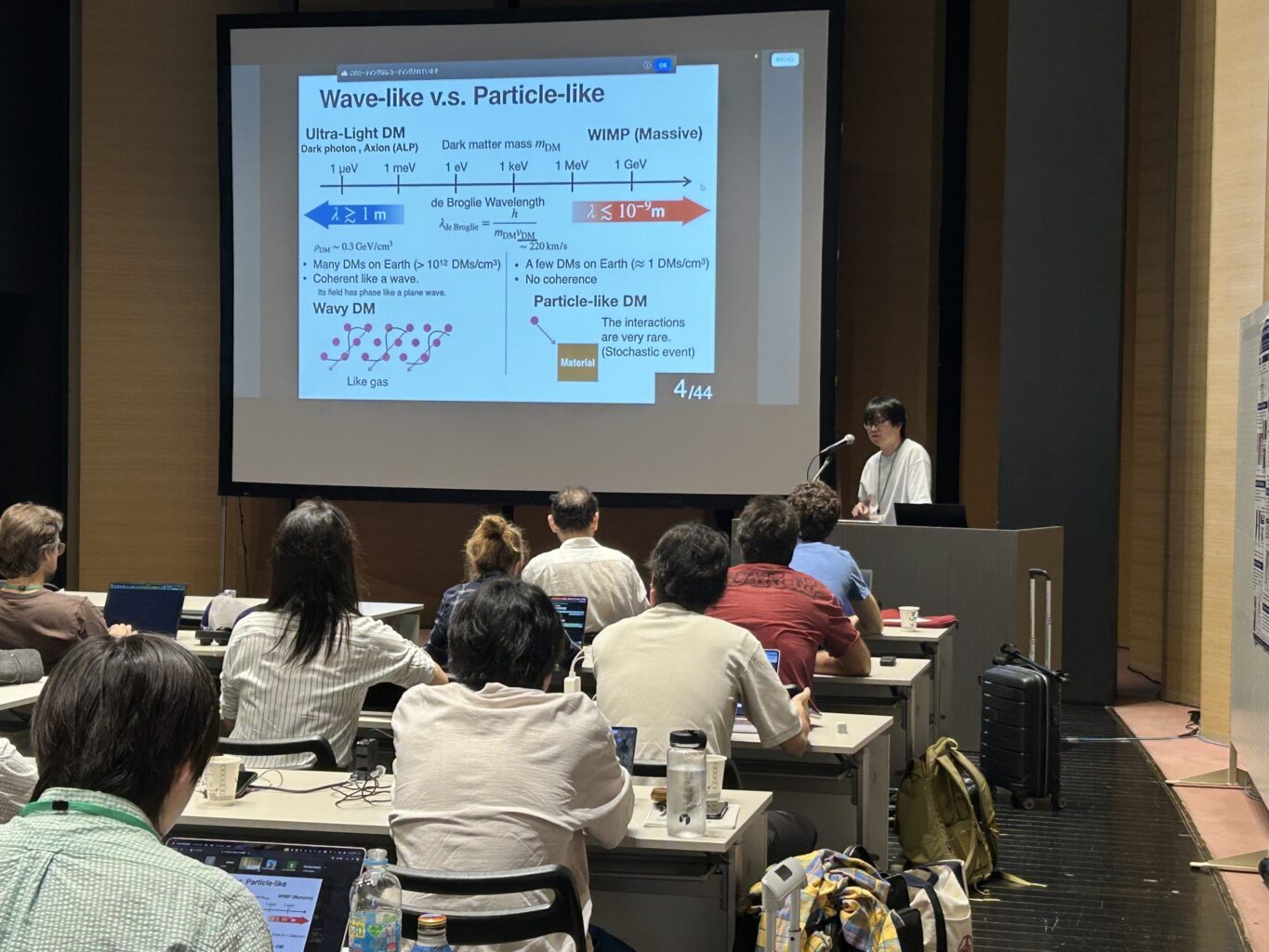
On March 6–7, 2026, Associate Professor Shunsuke Adachi from our laboratory gave an oral presentation at the 11th Workshop on Low-Radioactivity Techniques held at Kobe University.
The presentation introduced the DOSUE-RR experiment, which aims to detect ultralight dark matter candidates such as dark photon and axion using a sensitive radio receiver system.

Workshop website: https://www.lowbg.org/ugrp/workshop/lb2025/index.html

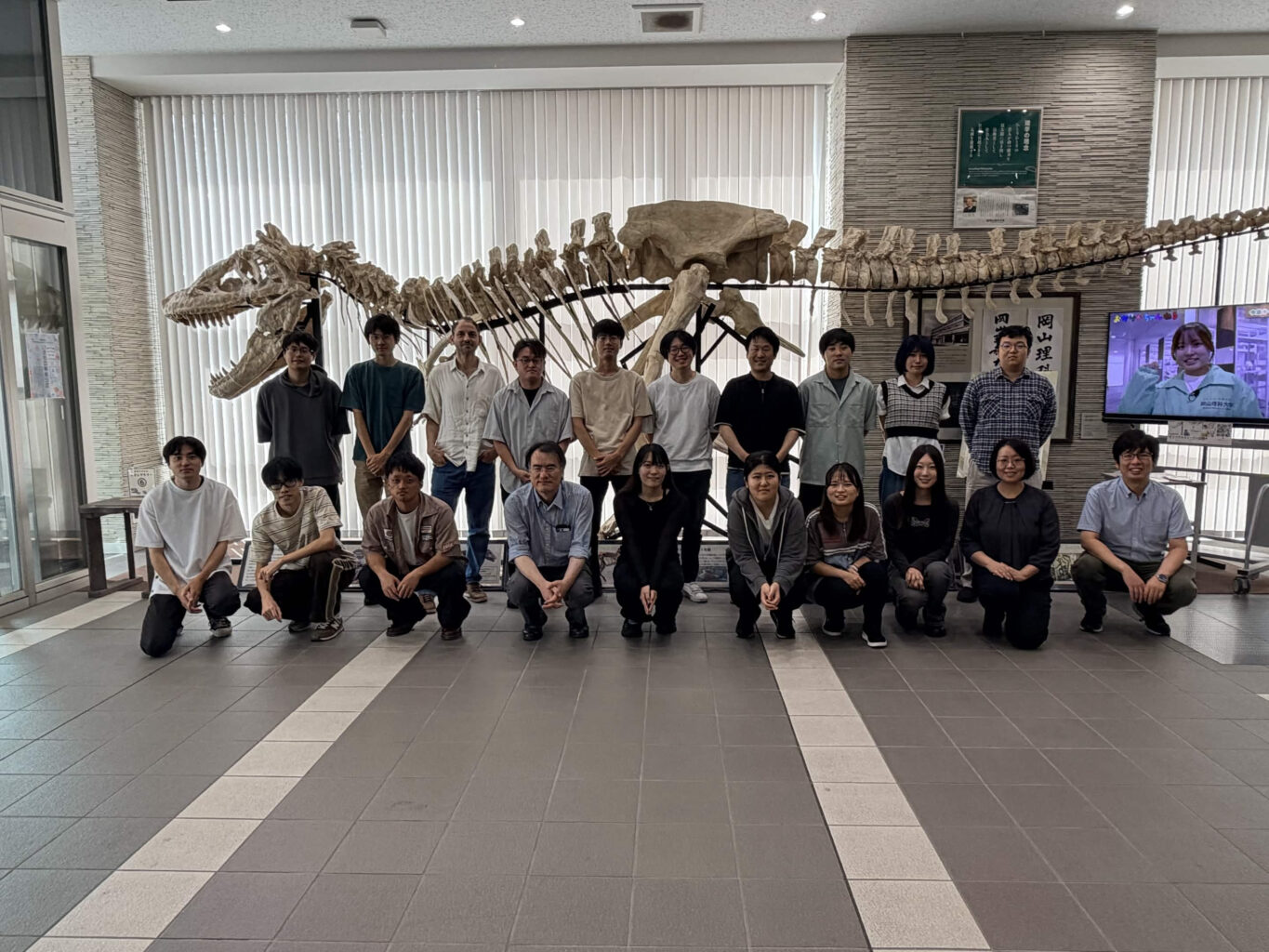
Joint Year-End Party (December 23, 2025)


On December 23, our laboratory hosted a year-end party. In addition to members of the Okayama University Astrophysics Laboratory (our laboratory), we were joined by MPA Director Komatsu and by colleagues from Okayama University of Science (the Yamauchi and Nagao groups). Bringing together members who normally work at different sites sparked natural conversations and new momentum for collaborations. Thank you to everyone who attended—we’ll continue to balance research, education, and outreach in the year ahead.

Cosmology Seminar by Dir. Komatsu


During his stay in Okayama, Director Eiichiro Komatsu led a cosmology seminar. Starting from the Friedmann equations that describe the expansion of space, participants followed the derivation of the cosmic expansion rate and the age of the universe. The sessions benefited not only students working on CMB but also those in other areas.

Associate Professor Adachi’s Physics Colloquium


On December 17, the second Physics Colloquium was held in Building 2 of the Faculty of Science, where our Associate Professor Adachi gave a lecture titled “What am I wandering to search for?” He reflected on his research from student days to the present. The colloquium drew many students and faculty across fields, and the Q&A was lively.

A standing reception afterward fostered cross-disciplinary conversations and meaningful exchange.

Director Komatsu to Visit Okayama


Eiichiro Komatsu, Director of the Max Planck Institute for Astrophysics (MPA), will be in residence at our laboratory for about one month beginning December 16, 2025. Following last year’s fruitful stay, we look forward to another month of active discussions that will deepen our understanding and advance research in CMB and astrophysics more broadly.

Front row, second from left: Dir. Komatsu.

Participation in the “Second International Conference on the Physics of the Two Infinities”


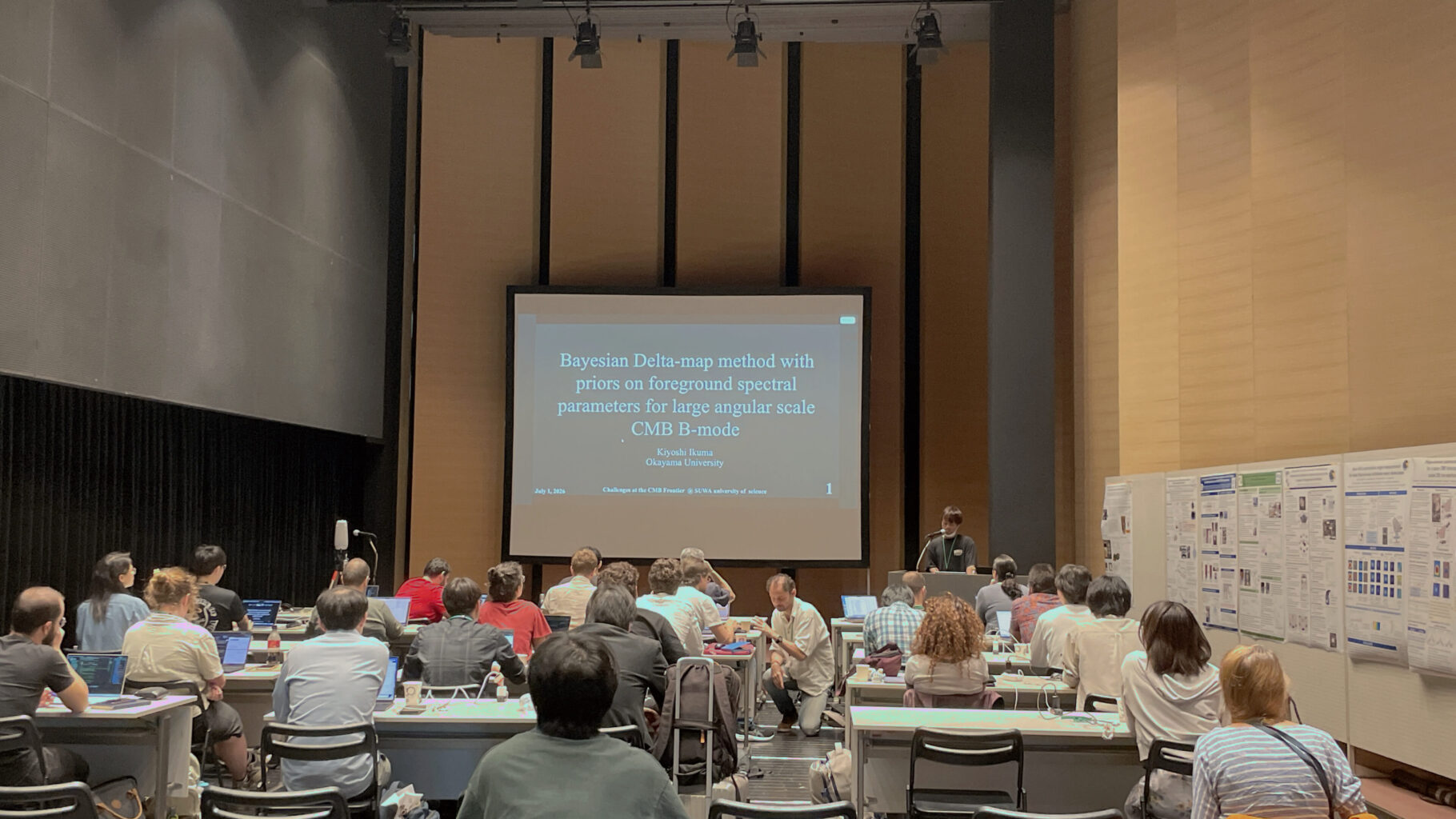
From November 17–21, 2025, at the University of Tokyo’s Hongo Campus, Ikuma (D1) took part in the Second International Conference on the Physics of the Two Infinities and delivered an oral presentation titled “Hybrid Delta-map: Combining Harmonic and Real-space Methods for CMB Foreground Removal.” The talk summarized ongoing results on CMB foreground removal and helped clarify future challenges and research directions—making for a highly productive meeting.

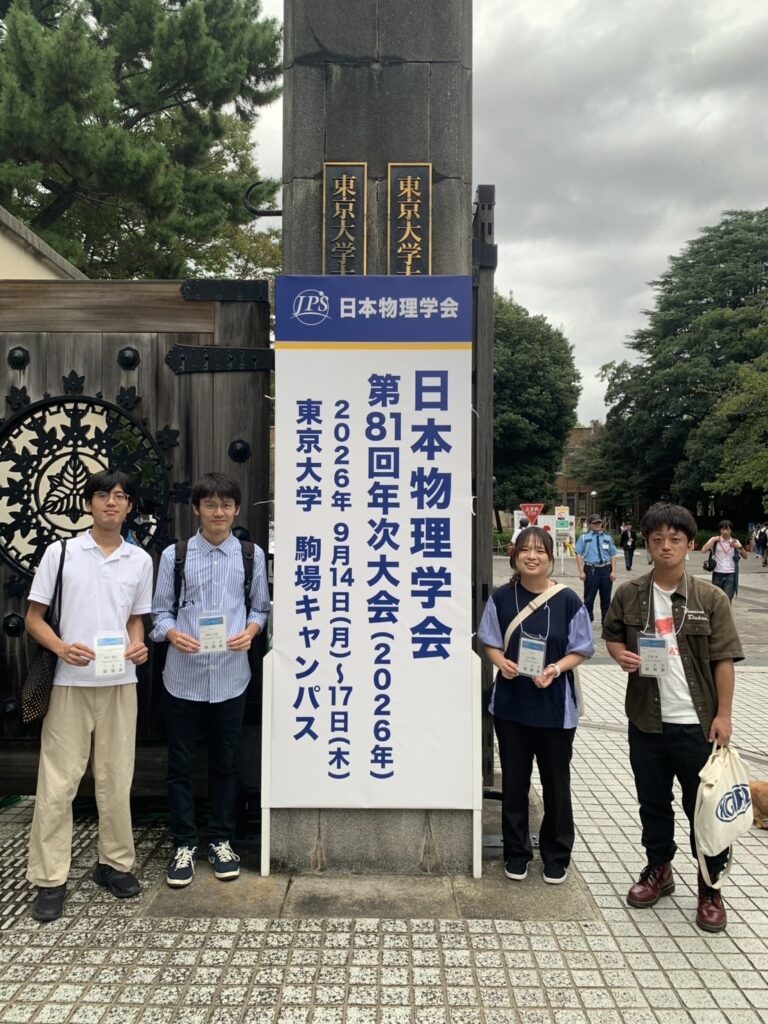
Mr. Kiyoshi Ikuma receives the Student Outstanding Presentation Award at the 80th Annual Meeting (2025) of the Physical Society of Japan

Mr. Kiyoshi Ikuma, a first-year doctoral student in the Graduate School of Environmental, Life and Natural Sciences at Okayama University and a member of our laboratory, received the Student Outstanding Presentation Award at the 80th Annual Meeting (2025) of the Physical Society of Japan. Congratulations to Mr. Ikuma on this achievement. His award is also introduced on the Department of Physics website. The title of his presentation was “Novel Hybrid Delta-map: Fusion of Spherical Harmonic Templates and Real- space Analysis for Large Angular Scale CMB Foreground Removal”

Visit to Okayama University by Researchers from Kavli IPMU

On November 7, 2025, Guillaume Patanchon (Visiting Researcher at the Kavli Institute for the Physics and Mathematics of the Universe, The University of Tokyo, and Associate Professor at the University of Paris), Associate Professor Tomotake Matsumura, and first-year doctoral student Ryosuke Akizawa from Kavli IPMU visited Okayama University. During their visit, they exchanged views on topics related to the cosmic microwave background (CMB) and satellite missions. The discussions provided a valuable opportunity to deepen our understanding of CMB observations and data analysis.

Visit to the Max Planck Institute for Astrophysics (MPA) by Ikuma

From October 1 to October 31, 2025, first-year doctoral student Ikuma visited the research group of Director Komatsu at the Max Planck Institute for Astrophysics (MPA) in Garching near Munich. During his stay, he presented his own research on the cosmic microwave background (CMB) and exchanged ideas on related projects and analysis methods being pursued at MPA. Through group meetings and individual discussions, he received concrete advice on his ongoing work. He also gave an internal seminar at MPA to present his research. This visit provided him with valuable insights that will be beneficial for his future research.